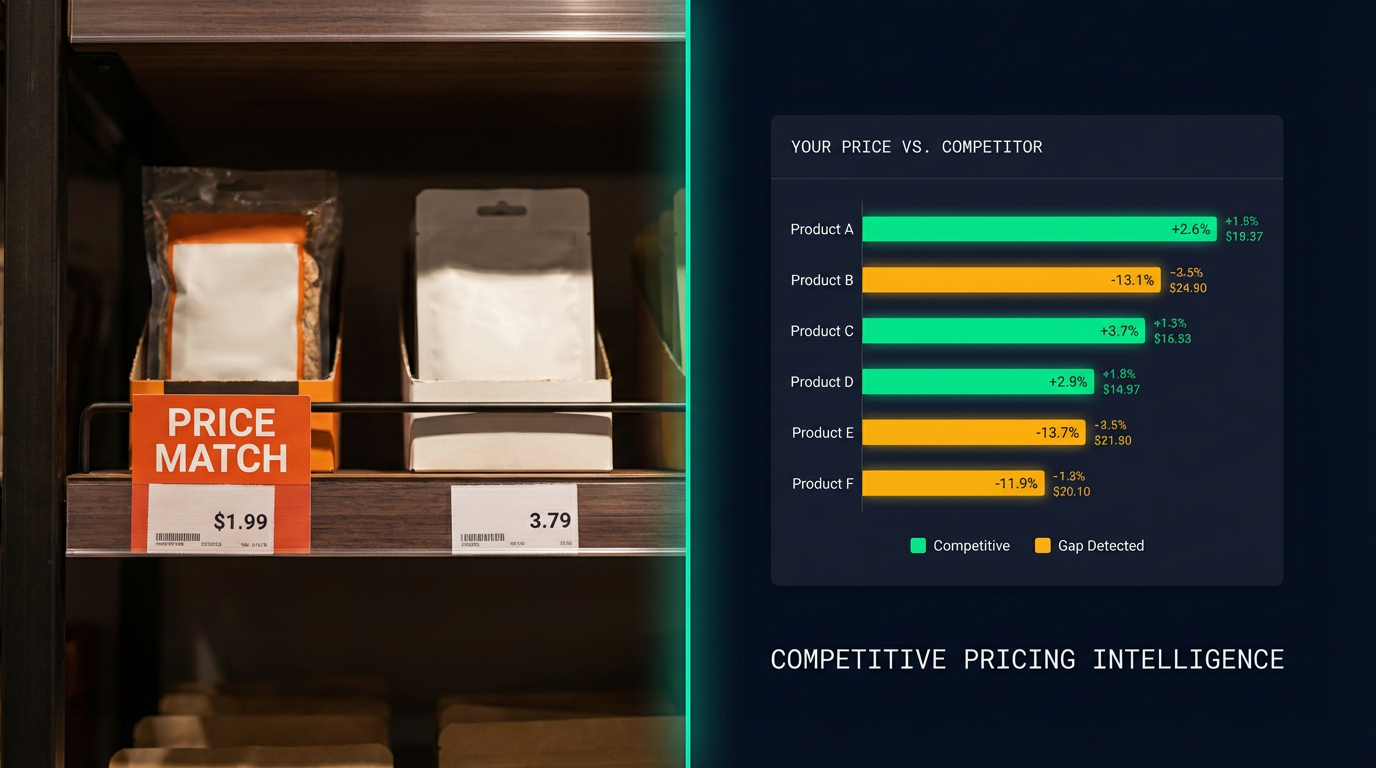
Price matching, dynamic repricing, and competitive intelligence pipelines — the systematic approach large retailers use to win on price without destroying their own margins.
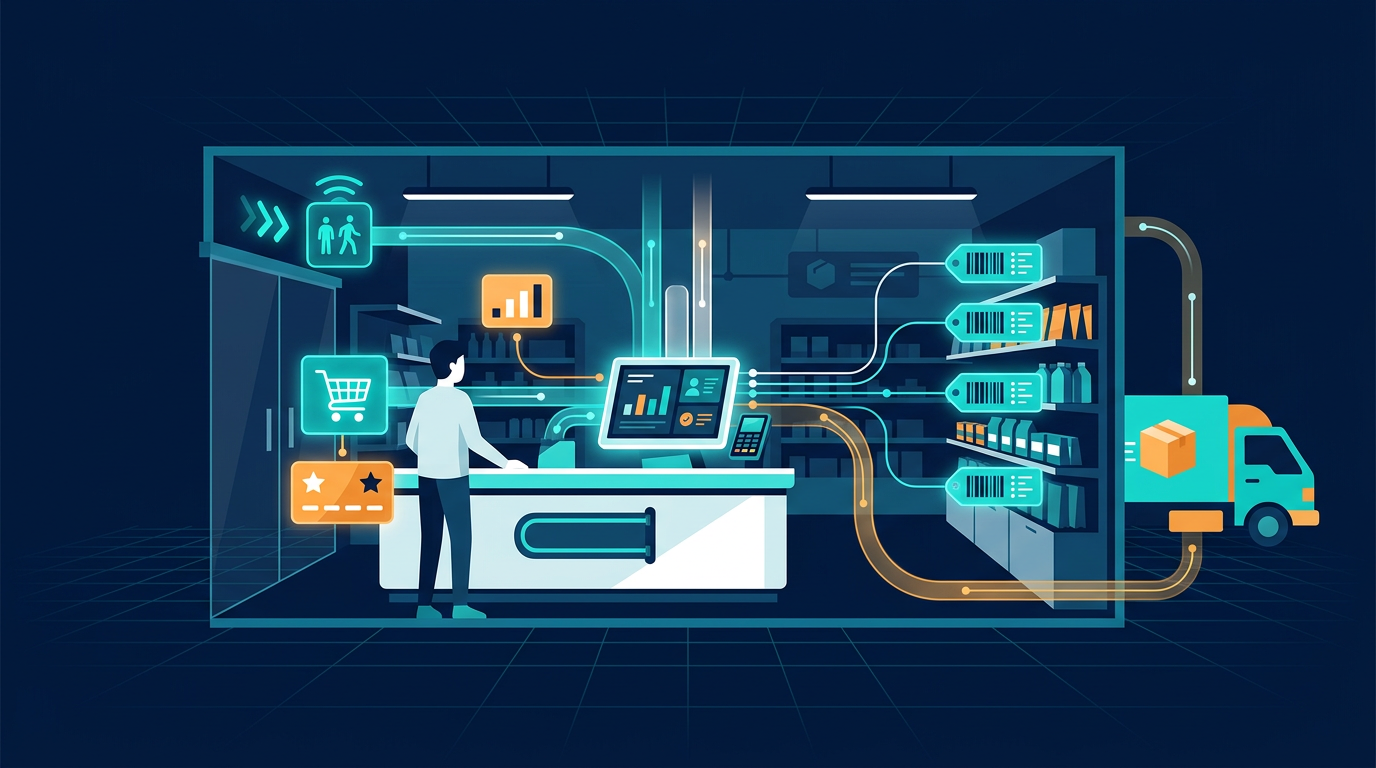
Walk into any large grocery store and pick up a bottle of Heinz ketchup. The price on that shelf label wasn't set by a buyer looking at cost and adding a margin. It was set by a pricing engine that scraped competitor prices this morning, compared them against a pre-built competitive index, checked where Heinz ketchup sits on the retailer's strategic role framework, and decided — algorithmically — whether to hold, match, or undercut. The whole process took milliseconds. It runs for every SKU, every day.
Competitor pricing strategy in modern retail is not a spreadsheet exercise that happens once a quarter. It is a continuous intelligence operation, supported by data infrastructure, algorithmic decision-making, and a strategic framework that determines when price is the right weapon and when it isn't. Understanding how it works — end to end — is one of the most important things a retail analyst or data scientist can learn, because pricing decisions sit at the exact intersection of competitive intelligence, consumer psychology, and margin management.
This is how it actually works.
The Strategic Foundation: Not Everything Competes on Price
The first and most important thing to understand about competitive pricing is that large retailers don't try to win on price across their entire assortment. That path leads to margin destruction and a race to the bottom that benefits nobody except the largest player with the most buying leverage — typically Walmart, Amazon, or Costco, depending on the category.
Instead, sophisticated retailers use a product role framework to segment their assortment before any competitive pricing logic is applied.
The most common segmentation has four categories:
Known Value Items (KVIs) are the products consumers price-check regularly and use as mental benchmarks for whether a store is "cheap" or "expensive." Milk, eggs, Coca-Cola, bread, Tide detergent — the list is short, highly category-specific, and enormously consequential. Research consistently shows that consumers form their perception of a store's overall price image based on a remarkably small number of KVIs — often fewer than 100 items in a 30,000-SKU grocery assortment. These items must be price-competitive. A retailer that is 15% more expensive than Walmart on eggs will be perceived as expensive across the entire store, even if their prices are actually better on hundreds of other items.
Competitive items are products where consumers do some price comparison but not obsessively. The retailer wants to be within a competitive range — typically defined as within 5–10% of the market average — but doesn't need to match the lowest price. Margin can be held here without damaging price perception.
Non-competitive or differentiated items are private label products, exclusive items, highly perishable fresh categories, or products where the retailer's own brand is strong enough that direct price comparison is less relevant. These items carry higher margins and are shielded from direct competitive pressure by differentiation rather than price.
Basket-builder items are high-frequency, moderate-margin products that drive trip frequency but aren't obsessively price-checked. Competitive pricing on these items is secondary to availability and convenience.
The strategic insight is this: the goal of competitive pricing is not to be cheapest everywhere — it's to be perceived as competitive where it matters, while protecting margin everywhere else. This requires knowing which items are in which category, which requires data.

Building the Competitive Intelligence Pipeline
Before any pricing decision can be made, you need to know what competitors are charging. This sounds obvious, but the operational reality of competitive price monitoring at scale is a significant data engineering problem.
A large retailer competing across multiple categories needs to monitor prices on potentially tens of thousands of SKUs across dozens of competitors, updated frequently enough to be actionable. This is solved through three primary data collection approaches, often used in combination.
Web scraping and digital price feeds are the most common method for e-commerce competitors and click-and-collect retailers. Automated scrapers visit competitor websites and apps, extract product prices, and load them into a centralized competitive price database. The technical challenges are real: anti-scraping measures, dynamic page rendering, product matching across retailers (a "32oz Heinz Ketchup" might be listed differently across five competitor sites), and the latency between when a price changes and when the scraper picks it up. Teams that do this well invest heavily in product matching logic — often a combination of GTIN/barcode matching for exact products and a similarity model for near-matches.
Third-party competitive intelligence providers like NielsenIQ, 84.51, Numerator, and specialized pricing data vendors sell competitive price data on a subscription basis. The advantage is breadth and quality — these providers have established data collection infrastructure, cleaner product matching, and often include non-digital price points collected through in-store price audits. The disadvantage is cost and latency; the data is typically a day or more old and may not cover the full assortment at the frequency needed for daily repricing.
Mystery shopping and in-store audits remain relevant for categories where competitor pricing doesn't live online — particularly independent and regional grocery competitors, foodservice channels, and club-format retailers whose online pricing doesn't reflect in-store reality. Structured audit programs, sometimes augmented by crowdsourced data collection tools, fill these gaps.
The output of this pipeline is a competitive price index — typically expressed as the retailer's price as a percentage of the market average or a specific competitor's price — calculated at the SKU level for every product where competitive data is available.
Price Index = (Retailer Price / Competitor Price) × 100
A price index above 100 means you're more expensive than the competitor. Below 100 means you're cheaper. A KVI with a price index of 112 against Walmart is a problem. A differentiated private label item with a price index of 108 against a regional competitor is probably fine.
The Repricing Decision Engine
With a competitive price index in hand and a product role framework defining which items matter most, the repricing engine can run. In a mature retail pricing operation, this is largely automated — but the automation is governed by a set of rules and guardrails that reflect both competitive strategy and margin constraints.
The core logic looks something like this:
IF product_role = 'KVI' AND price_index > threshold_kvi -- e.g., 103 AND margin_after_reprice > floor_kvi -- protect minimum margin THEN recommend_price_decrease
IF product_role = 'Competitive' AND price_index > threshold_comp -- e.g., 108 AND margin_after_reprice > floor_comp THEN recommend_price_decrease
IF product_role IN ('Differentiated', 'Basket_Builder') AND price_index < 95 -- we're cheaper than needed THEN recommend_price_increase -- recover margin
The guardrails are as important as the rules. A pure competitive matching engine without guardrails will chase competitor prices into margin-destroying territory. Every repricing rule is bounded by a margin floor — a minimum acceptable gross margin percentage below which the system will not recommend a price decrease, regardless of competitive position. These floors are set category by category, reflecting the different margin structures and strategic roles of different departments. Additional guardrails include price change frequency limits (changing a price more than once per week on most items creates operational complexity and consumer confusion), minimum absolute price thresholds, and price rounding rules (prices ending in .99 or .97 are psychologically distinct from prices ending in round numbers, and the engine respects category-specific rounding conventions). The output of the repricing engine isn't executed automatically in most organizations. It routes to a pricing analyst team as a queue of recommended changes, ranked by priority — KVI competitive gaps first, large volume items second, long tail last. Analysts review, apply judgment, and approve or reject. Approved changes feed into the master price file and push to POS systems and digital channels on a scheduled cadence.

Dynamic Pricing: The Amazon Effect
No discussion of competitive pricing strategy would be complete without addressing dynamic pricing — and specifically, why most brick-and-mortar retailers implement it far more conservatively than you might expect.
Amazon changes prices on millions of items multiple times per day, optimizing against a combination of competitive position, demand signals, inventory levels, and seller competition. This is possible because Amazon's prices exist only in a digital interface with zero physical change costs. Changing a price on Amazon means updating a database record.
Changing a price in a physical retail store means reprinting and replacing shelf labels across every store in the chain. For a 400-store retailer changing 500 prices per week, that's 200,000 physical shelf label changes. The labor cost is substantial, the error rate is non-trivial (a label that doesn't get changed creates a compliance and legal exposure risk), and the consumer experience of walking into a store where prices seem to change unpredictably is genuinely negative.
The result is that physical retail competitive pricing cycles are measured in days and weeks, not hours. Most grocery retailers run a weekly or twice-weekly pricing cycle. The competitive intelligence feeds daily, but the repricing cadence is governed by physical store operations.
Electronic shelf labels (ESLs) are changing this calculus. Retailers that have deployed ESL systems — where digital display labels update wirelessly from a central system — can reprice as frequently as they choose with no incremental labor cost. ESL adoption is accelerating in Europe and gaining ground in the US, and it is gradually shifting the competitive pricing dynamic for physical retail toward something closer to digital responsiveness.
Price Elasticity and Competitive Response Modeling
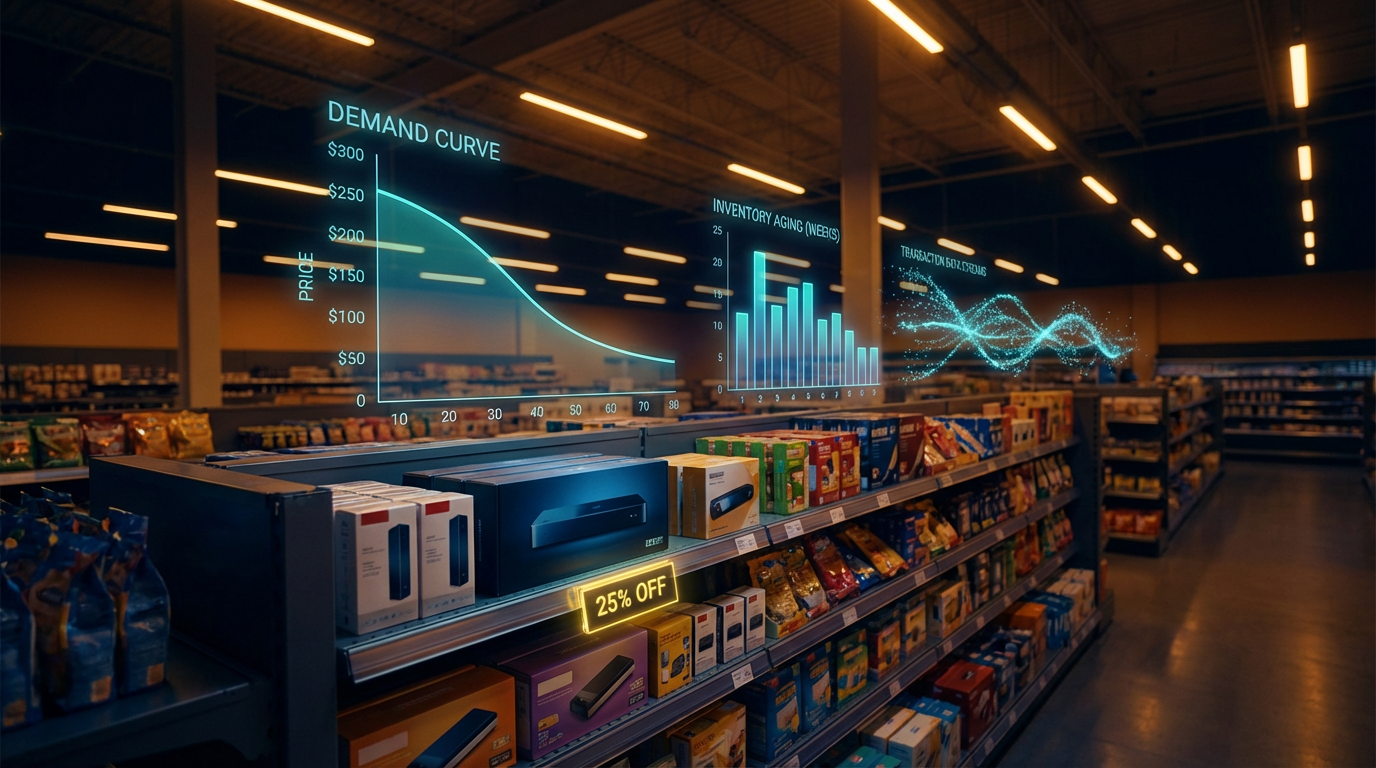
The most sophisticated layer of competitive pricing strategy isn't the repricing engine — it's the modeling infrastructure that predicts how consumers will respond to price changes and how competitors will respond to your moves.
Cross-price elasticity measures how demand for your product changes when a competitor changes their price for the same or a substitute product. If Walmart drops the price of their store-brand ketchup by 10% and your Heinz ketchup sales fall 8%, the cross-price elasticity is 0.8. This number quantifies your competitive exposure and tells you how aggressively you need to respond to a competitor's price move.
Cross-Price Elasticity = % Change in Quantity Demanded (Product A)
─────────────────────────
% Change in Price (Competitor Product B)
Competitive response modeling goes further: it attempts to predict whether a competitor will match or counter your price move. If you drop a KVI price to gain competitive position, will the competitor hold their price (you gain share), match your price (you both lose margin for no share gain), or go even lower (you've triggered a price war)? Modeling these game-theoretic responses requires historical data on competitor pricing reactions — essentially building a behavioral model of each major competitor from observed price change sequences over time.
The practical output of this analysis isn't a game theory proof — it's a risk-adjusted recommendation. "Dropping the price on whole milk from $3.49 to $3.29 is likely to improve price perception among KVI-sensitive shoppers. Competitor response probability is moderate; historical data suggests this competitor matches within 5–7 days on high-visibility dairy items. Estimated net impact: positive price image lift, neutral to slightly negative margin impact over 30 days if competitor matches."
That's the kind of intelligence that feeds executive pricing decisions on strategically important items.
The Margin Bridge: Connecting Competitive Pricing to Business Outcomes
Competitive pricing strategy, at its best, is not about being cheapest. It's about optimizing the relationship between price perception and margin performance across the entire assortment simultaneously.
The internal scorecard that senior retail pricing teams watch is a margin bridge — a decomposition of margin change that separates the contribution of price decisions from volume changes, mix changes, and cost changes. When a pricing team recommends a KVI price reduction, they need to show the full margin bridge: how much gross margin is surrendered directly by the price decrease, how much is recovered through volume lift (increased units sold at the lower price), and how much potential incremental margin is generated by the improved price image driving traffic that buys higher-margin items in the basket.
The best pricing teams in retail understand that a price decrease on eggs is not a cost — it's a customer acquisition investment. The question is always whether the downstream basket margin more than compensates for the direct margin surrendered on the KVI. Building that analytical case is what separates a pricing analytics function from a pricing administration function.
What This Means for Retail Data Professionals
Competitive pricing is a domain where data science, business strategy, and operations research genuinely intersect. The technical skills required span web scraping and data engineering (competitive intelligence pipelines), statistical modeling (price elasticity and cross-elasticity), optimization (repricing rules with margin constraints), and game theory-adjacent behavioral modeling (competitor response prediction).
But the practitioners who drive real impact in this space consistently demonstrate one thing beyond technical skill: they understand the strategic framework well enough to know which problems are worth solving analytically and which require human judgment that no model will reliably replicate. Knowing that KVI pricing is a consumer psychology problem as much as a competitive intelligence problem. Understanding that a margin floor is not an arbitrary constraint but a reflection of the business's viability requirements. Recognizing that the goal is perceived price competitiveness, not actual lowest price everywhere.
The shelf label with the ketchup price is the visible output of an invisible system. Building that system well is one of the most consequential things a retail analytics team can do.
---
This post is part of DSBootcamp's Retail Analytics series, where we break down the real systems powering enterprise retail decisions — with the business context, modeling depth, and operational realities that production work actually demands.
---