
Data Science & Analytics Blog: Tutorials, Guides & Experiment Design
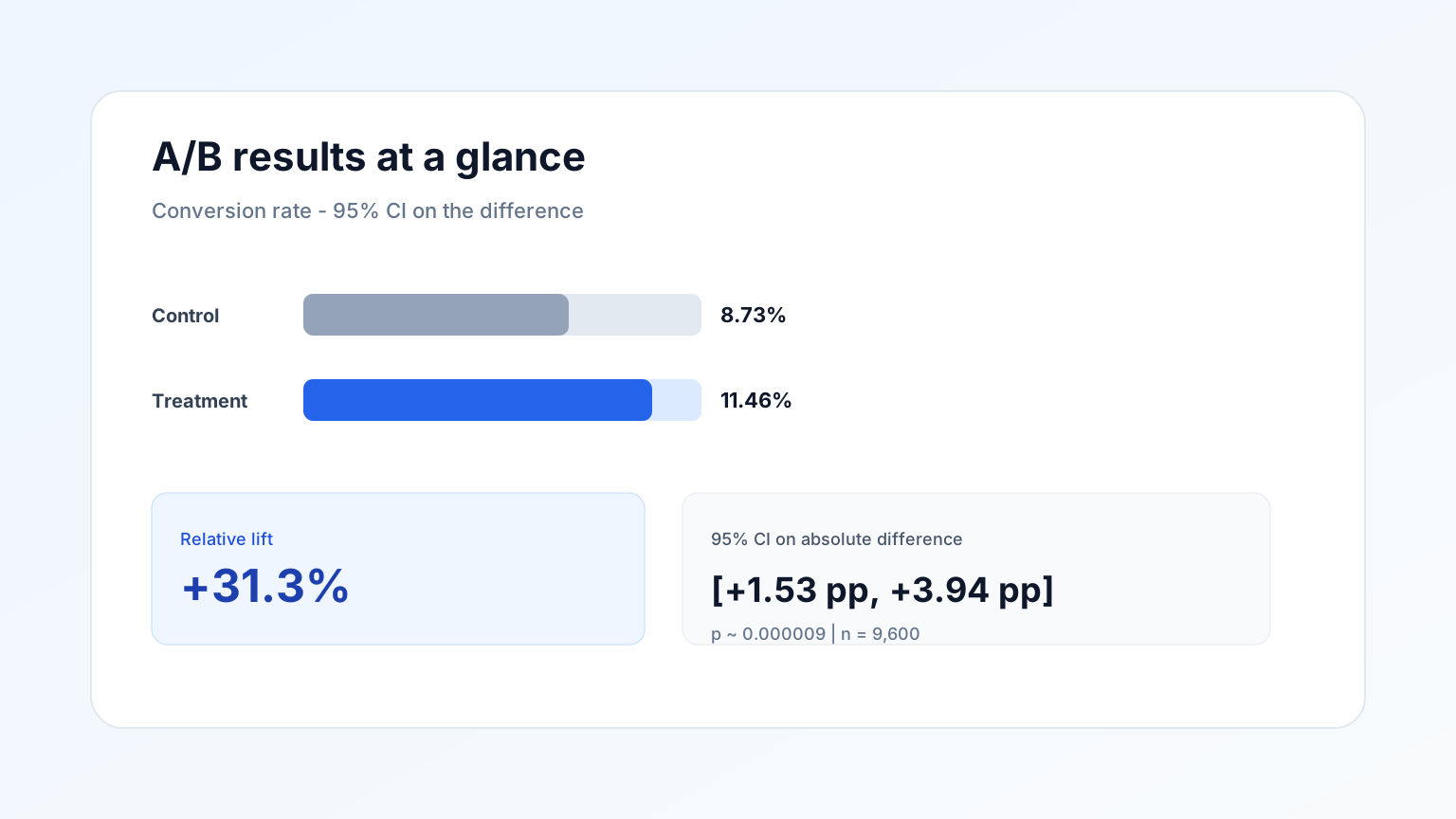
A/B Testing Results Explained: Lift, p-Values, and the Peeking Trap
Read a real checkout experiment end to end: download the CSV, compute conversion lift and a 95% CI in Python and SQL, watch day-2 peeking almost kill a winning variant, and decide with the full 9,600-user run.
DSBootcamp Team
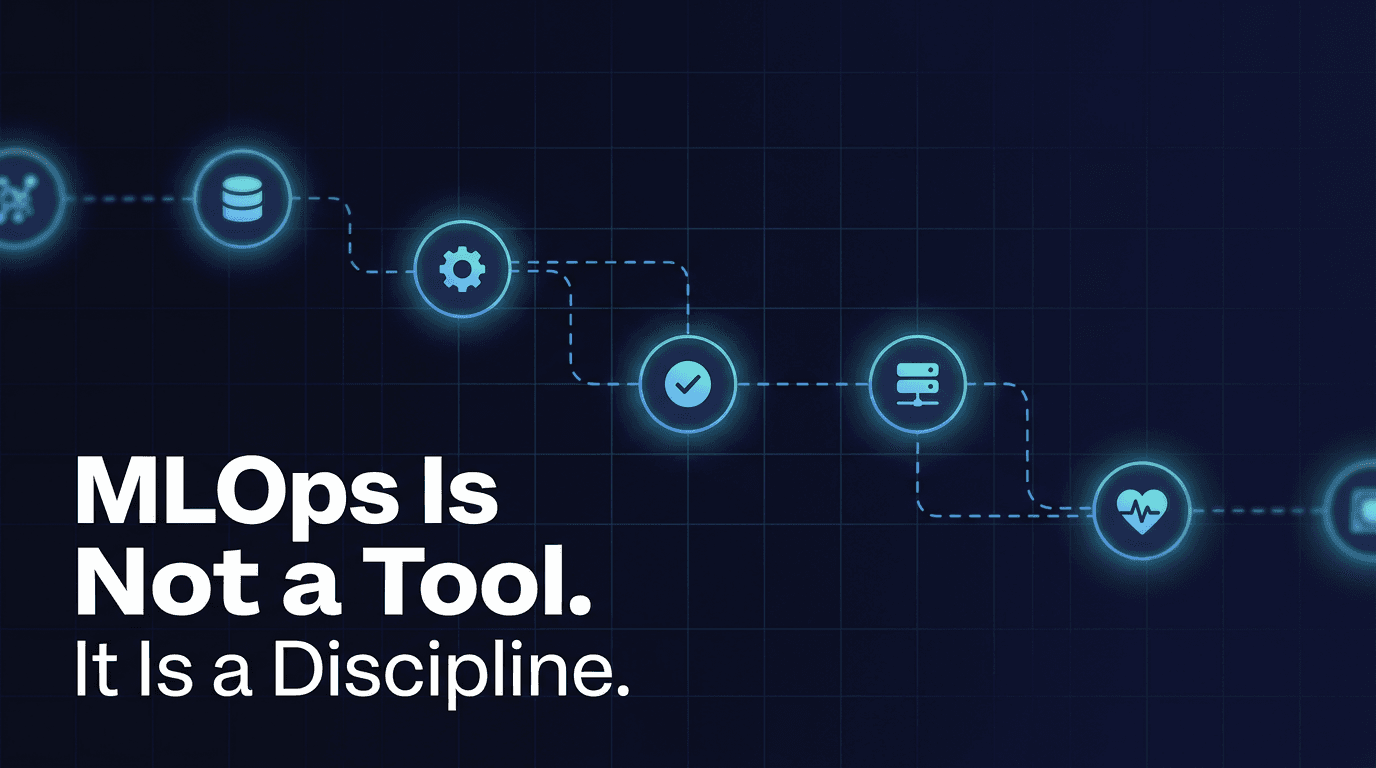
MLOps Is Not a Tool. It Is a Discipline. Here Is What It Actually Involves.
Most junior data scientists have heard of MLOps. Very few can explain what it means without Googling it. Here is the clearest explanation I can write. W...
DSBootcamp Team

The Coefficient Table Is Worth More Than the Prediction — If You Know How to Read It
How to translate regression coefficients into rupee-level business statements using the four-part structure: Finding, Number, Implication, Action. The U...
DSBootcamp Team
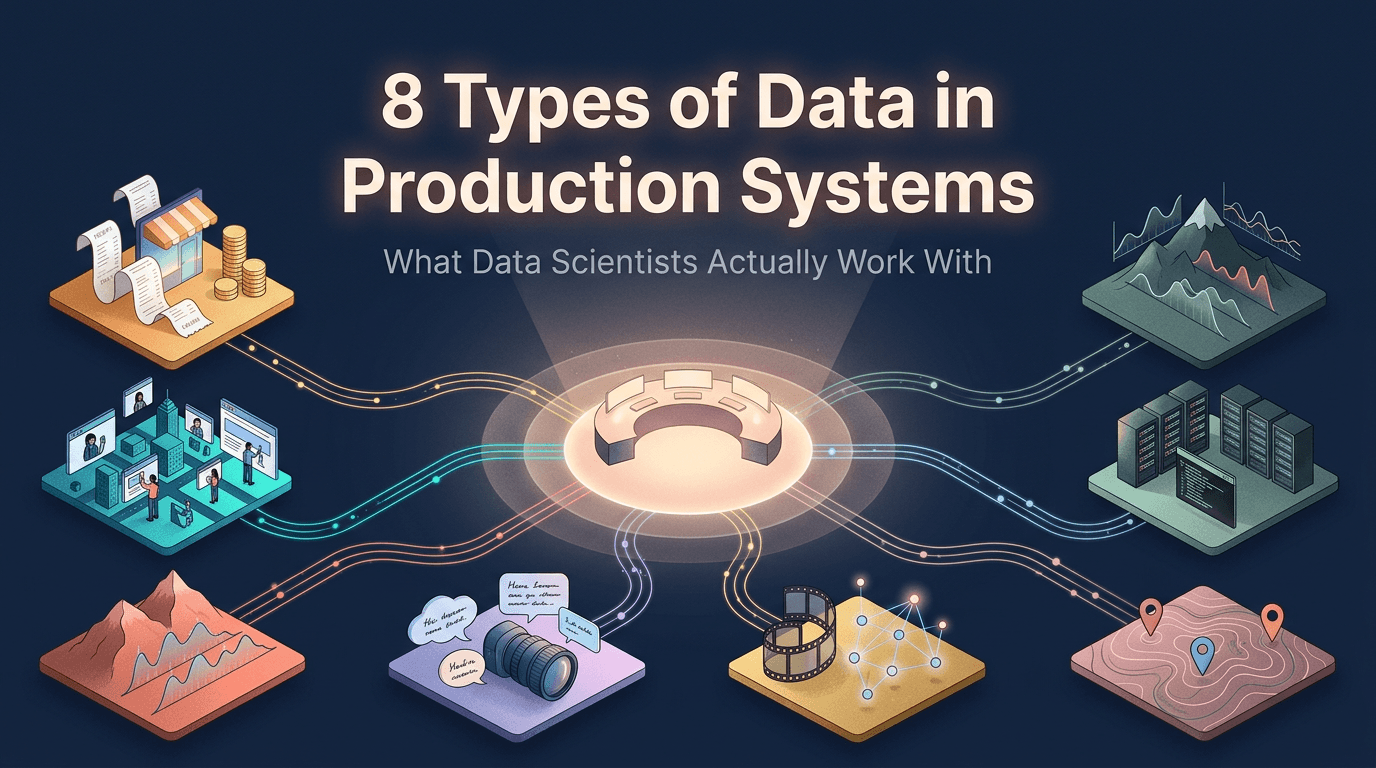
The 8 Types of Data Every Data Scientist Works With in Production
Most data science courses teach you how to work with data. What they rarely teach you is which kind of data you'll actually be staring at on a Monday mo...
DSBootcamp Team

Traffic Acquisition and Channel Mix Analysis in E-Commerce
Why Channel Mix Thinking Separates Good Marketers From Great Ones Most e-commerce teams know where their traffic comes from. They open Google Analytics,...
DSBootcamp Team

What is Marketing Mix Modeling (MMM) in E-Commerce
The Attribution Trap Every Growth Team Falls Into Here's a scenario that plays out in e-commerce growth teams every quarter. You're running campaigns ac...
DSBootcamp Team
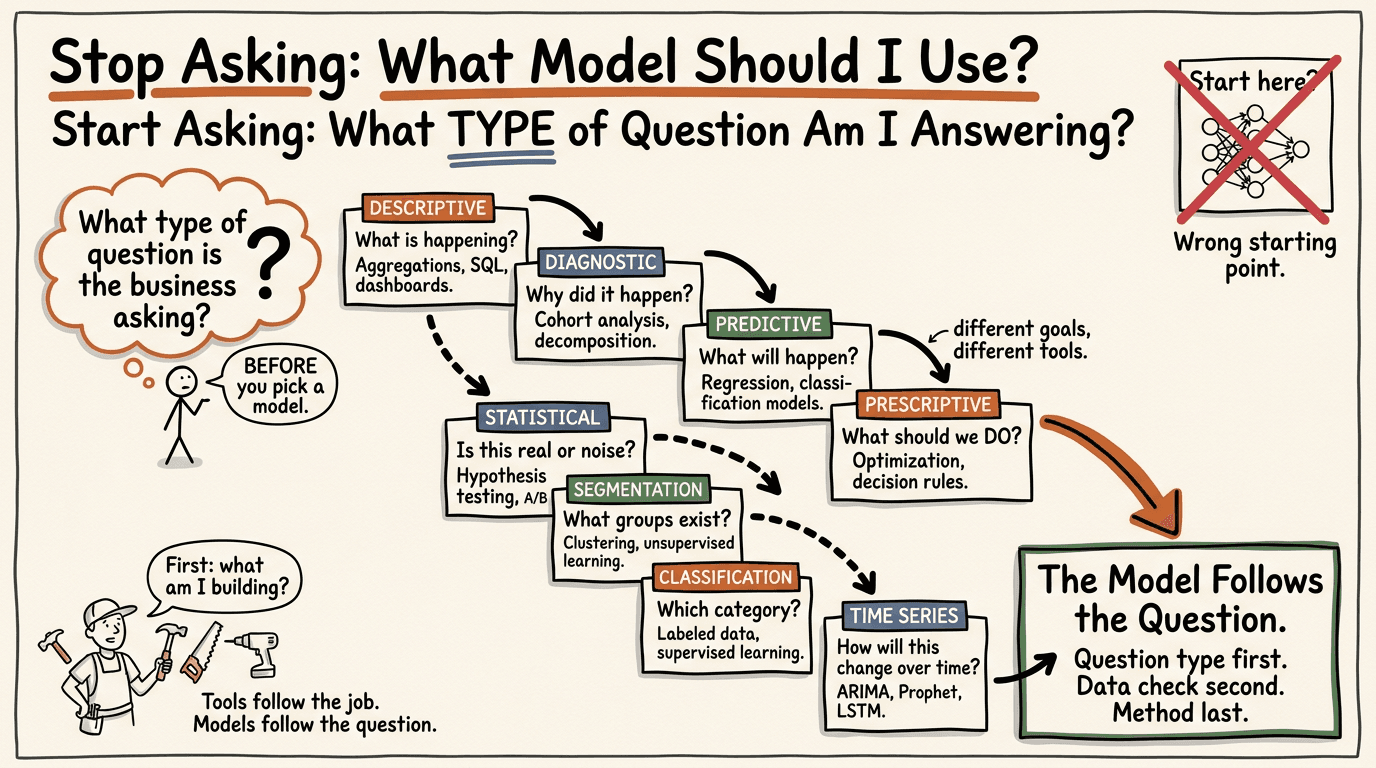
Stop Asking "What Model Should I Use?" Start Asking This Instead
Walk into any data science forum, any bootcamp Slack channel, any beginner community, and you will find some version of this question posted on a daily...
DSBootcamp Team

The Question Every Data Scientist Skips (And Why It Costs Them the Whole Project)
I've watched analysts build technically perfect models that answered the completely wrong question. The model was clean. The validation scores were soli...
DSBootcamp Team
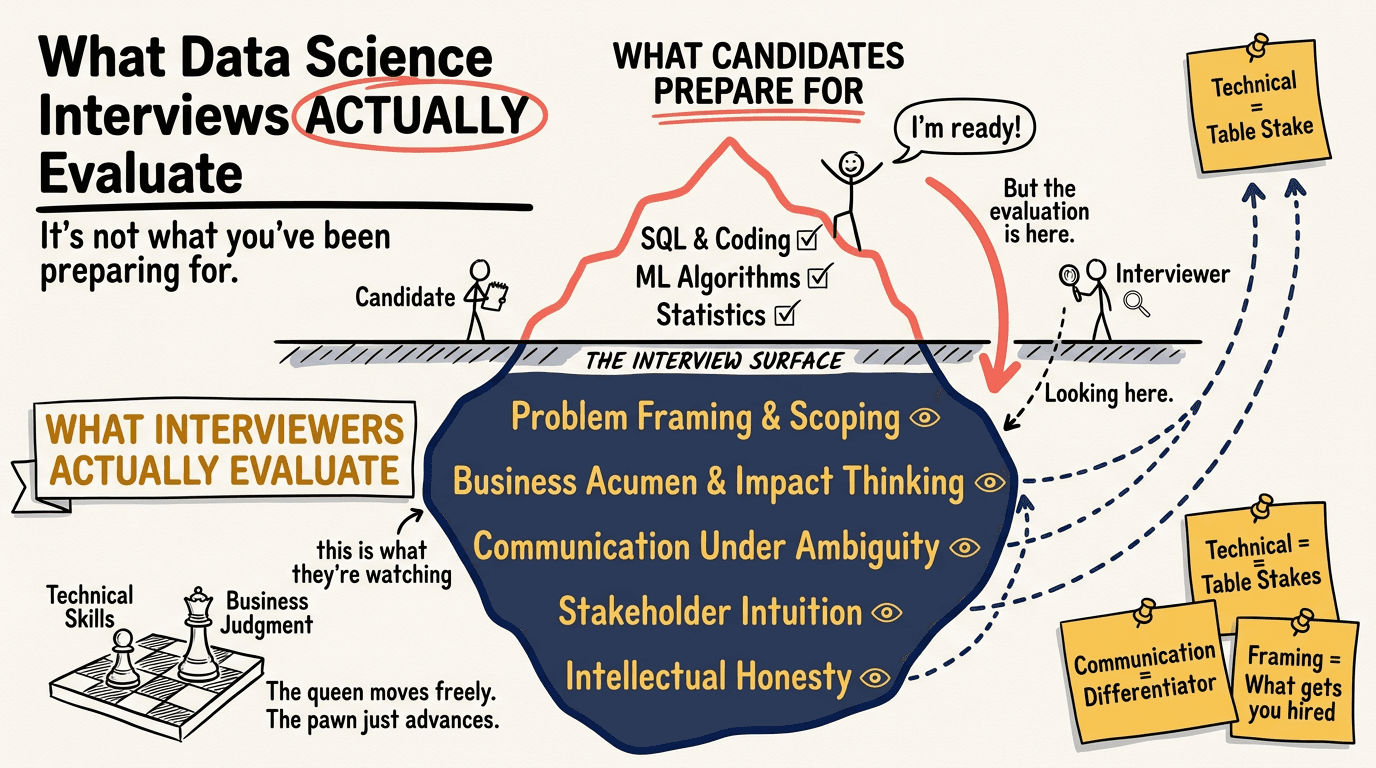
What Data Science Interviews Actually Evaluate (And It's Not What You Think)
The Preparation Paradox Open any data science interview guide. You'll find hundreds of SQL puzzles, probability brain-teasers, ML algorithm explanations...
DSBootcamp Team
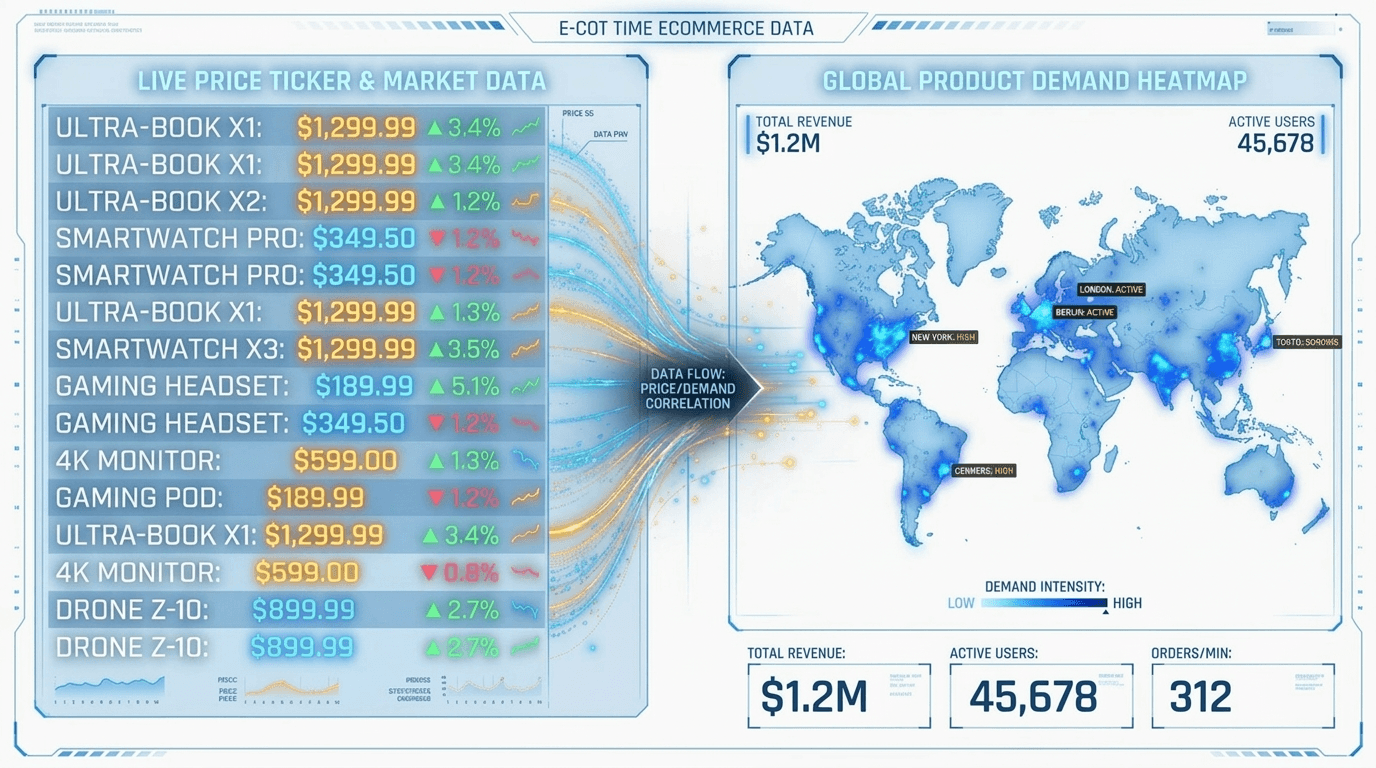
How Dynamic Pricing Actually Works on a E-Commerce Marketplaces
You've probably noticed it. You add something to your cart, step away for an hour, come back — and the price has changed. Maybe by a dollar. Maybe by tw...
DSBootcamp Team
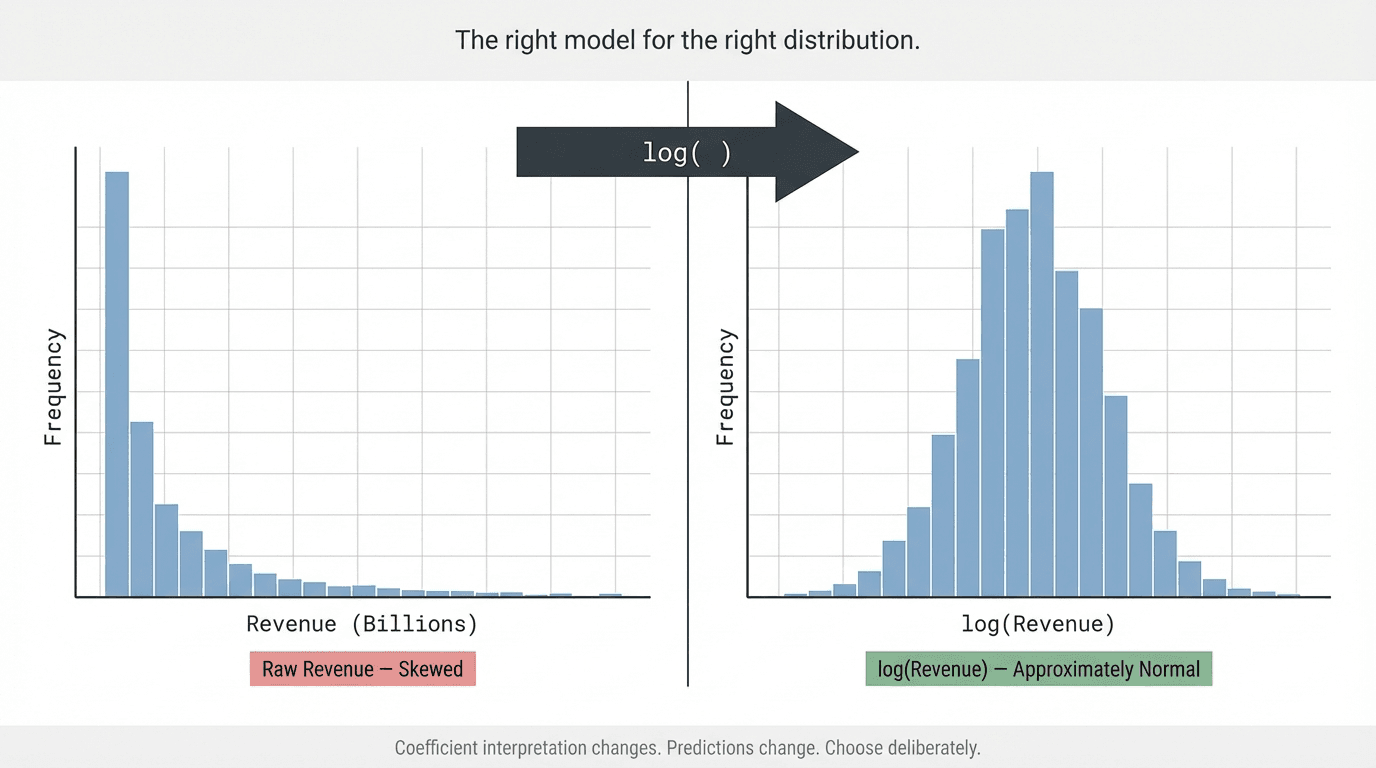
Why You Should Log-Transform Your Outcome — And When You Should Not
Skewed outcomes, multiplicative effects, interpreting log-linear regression coefficients, and the geometric mean as the right summary statistic for log-...
DSBootcamp Team

The Funnel Metrics Every E-Commerce Analyst Must Know
Sessions, add-to-cart rate, checkout rate, purchase rate, and return rate — what each one measures, how they interact, and where the money is actually l...
DSBootcamp Team
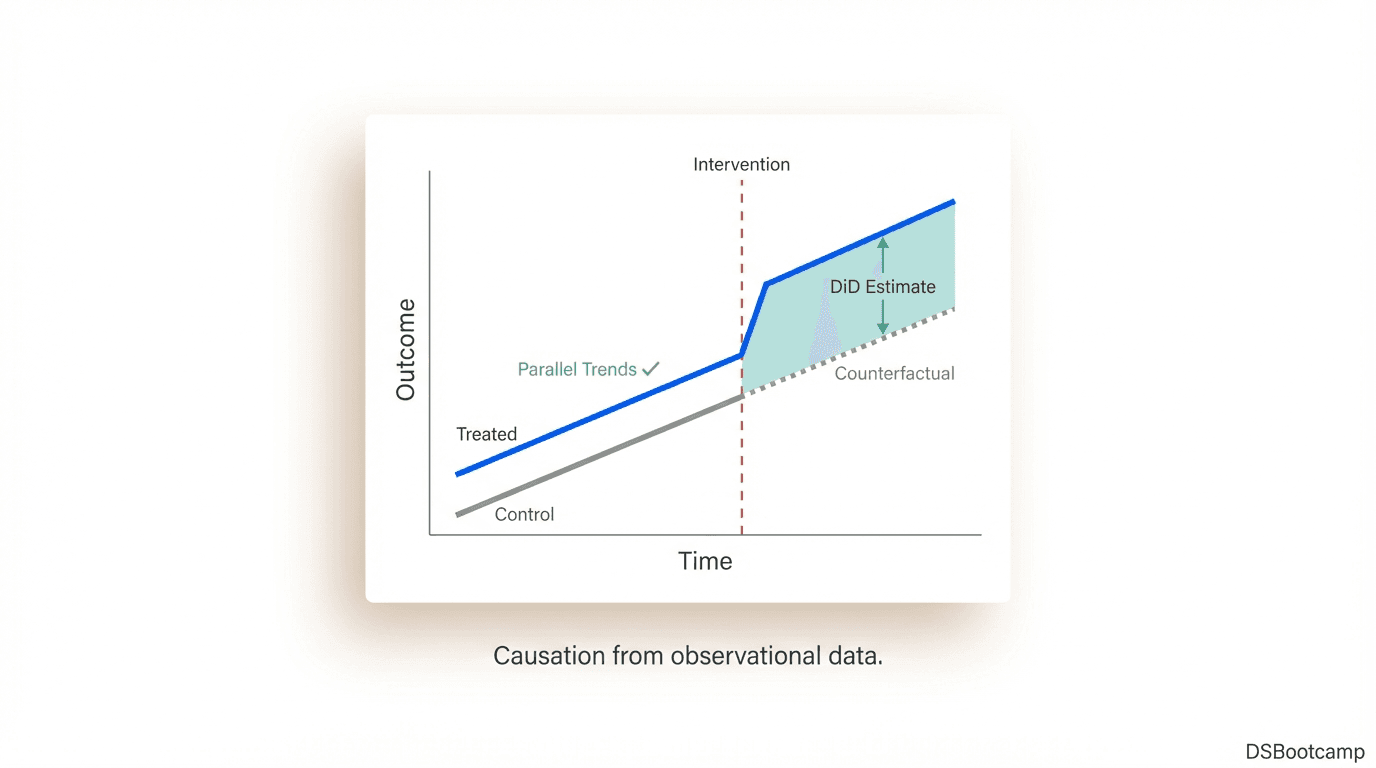
Difference-in-Differences — The Most Useful Causal Method You're Probably Not Using
The intuition, the parallel trends assumption, and three real business applications where DiD gives you causal estimates without a randomized experiment...
DSBootcamp Team

How Marketplaces Like Amazon Decide Which Sellers You See First
Search ranking on Amazon or Flipkart is not random. It's a function of conversion rate, fulfillment speed, return rate, and seller history. Here's the d...
DSBootcamp Team
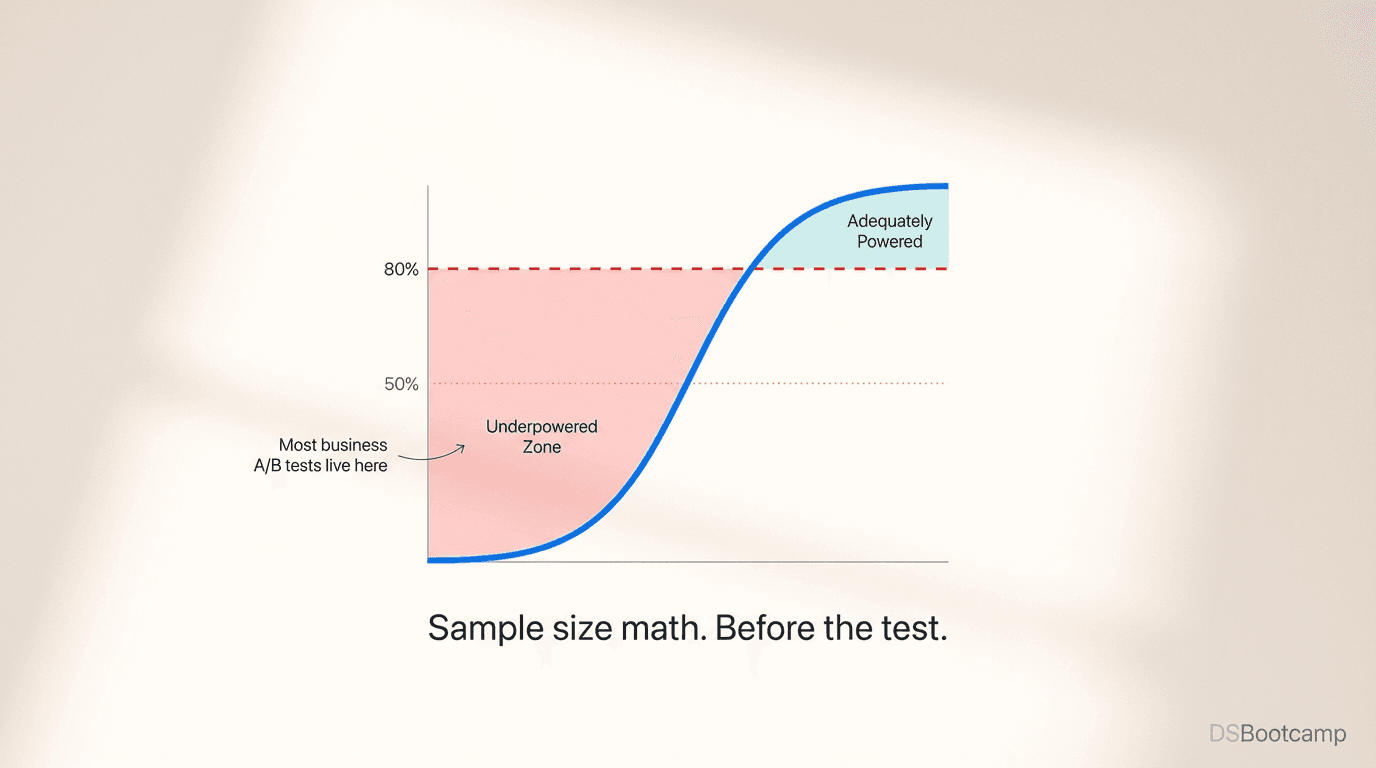
Your A/B Test Is Probably Underpowered — Here's How to Fix It
Most business experiments are designed to detect effects they were never powered to find. Here's the sample size math and why this matters more than any...
DSBootcamp Team
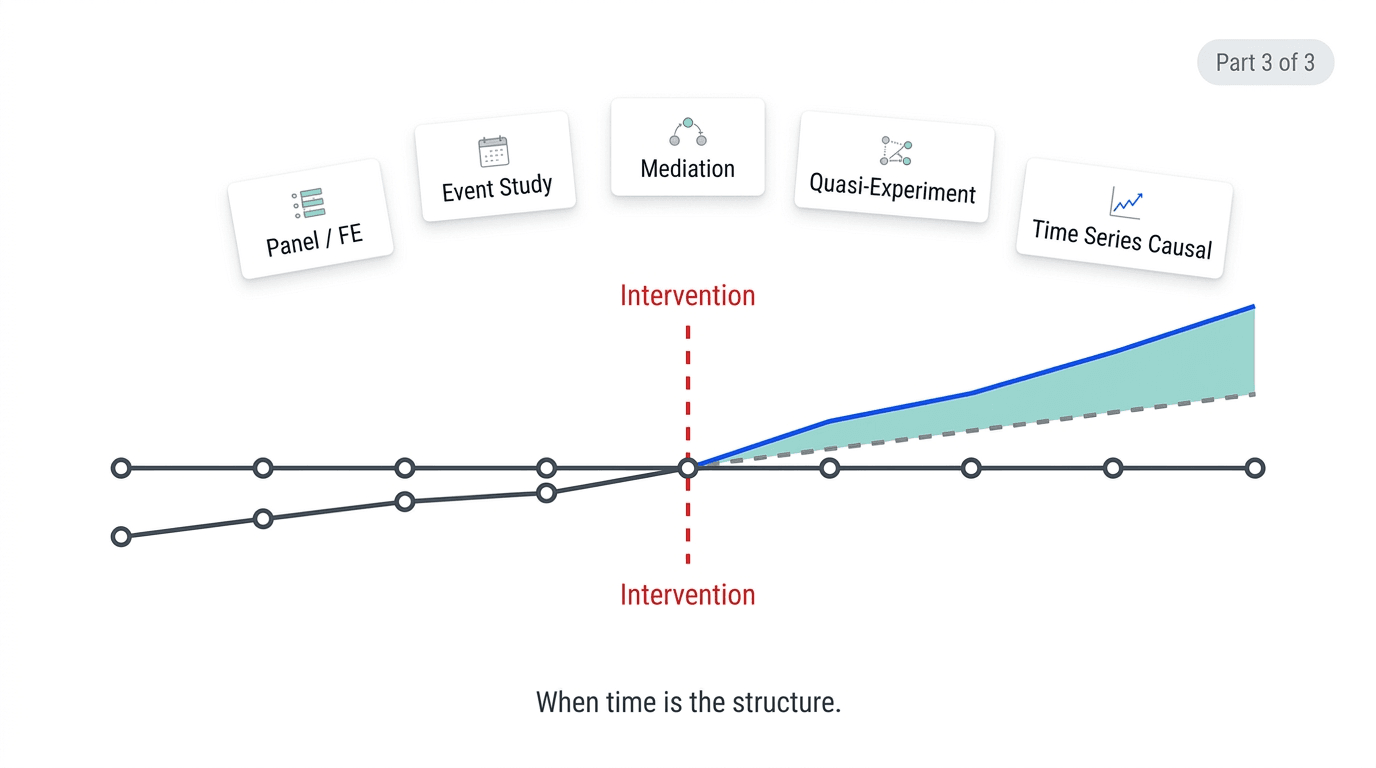
Econometrics for Data Scientists — Panel Data, Event Studies, Mediation, Quasi-Experiments, and Time Series Causal Methods
Part 3 of 3 — Longitudinal estimation, pathway analysis, natural experiments, and causal inference when your data has a time dimension that matters. Par...
DSBootcamp Team
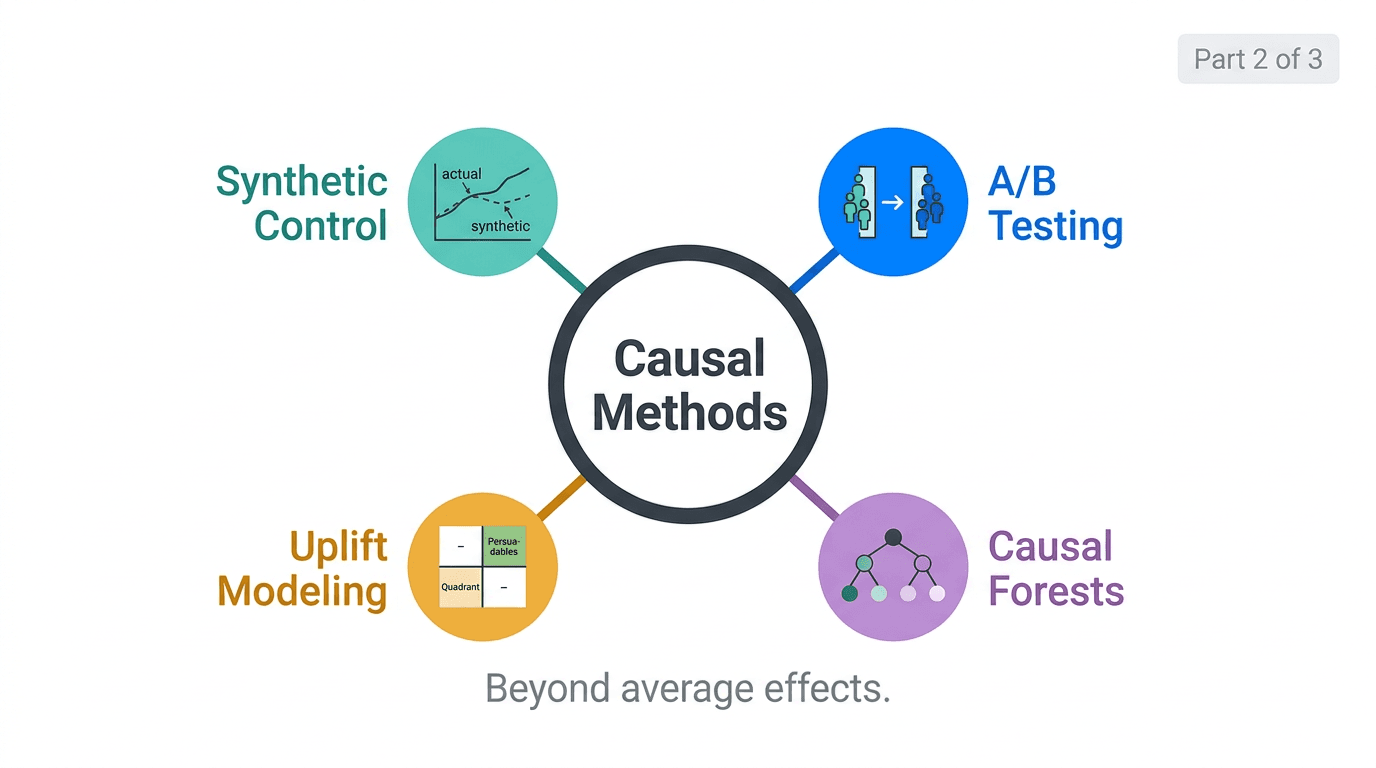
Econometrics for Data Scientists — Synthetic Control, A/B Testing, Uplift Modeling, and Causal Forests
Part 2 of 3 — Four methods for when you have no clean control group, want to run a real experiment, or need to understand who responds to treatment — no...
DSBootcamp Team
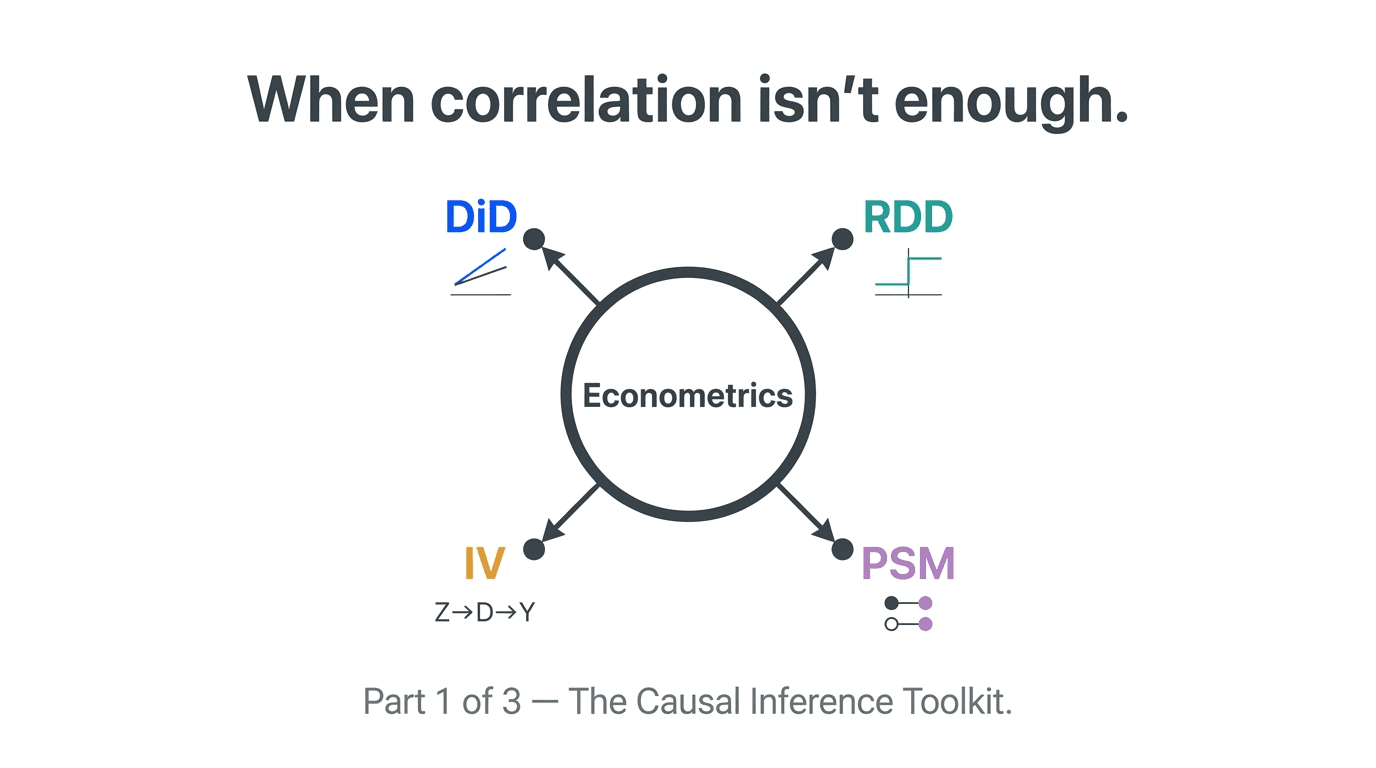
Econometrics for Data Scientists — What It Is, Why It Matters, and the Methods That Changed How We Think About Cause and Effect"
Part 1 of 3 — The discipline, the problem it solves, and four foundational methods for recovering causation from data you didn't design. Most data scien...
DSBootcamp Team
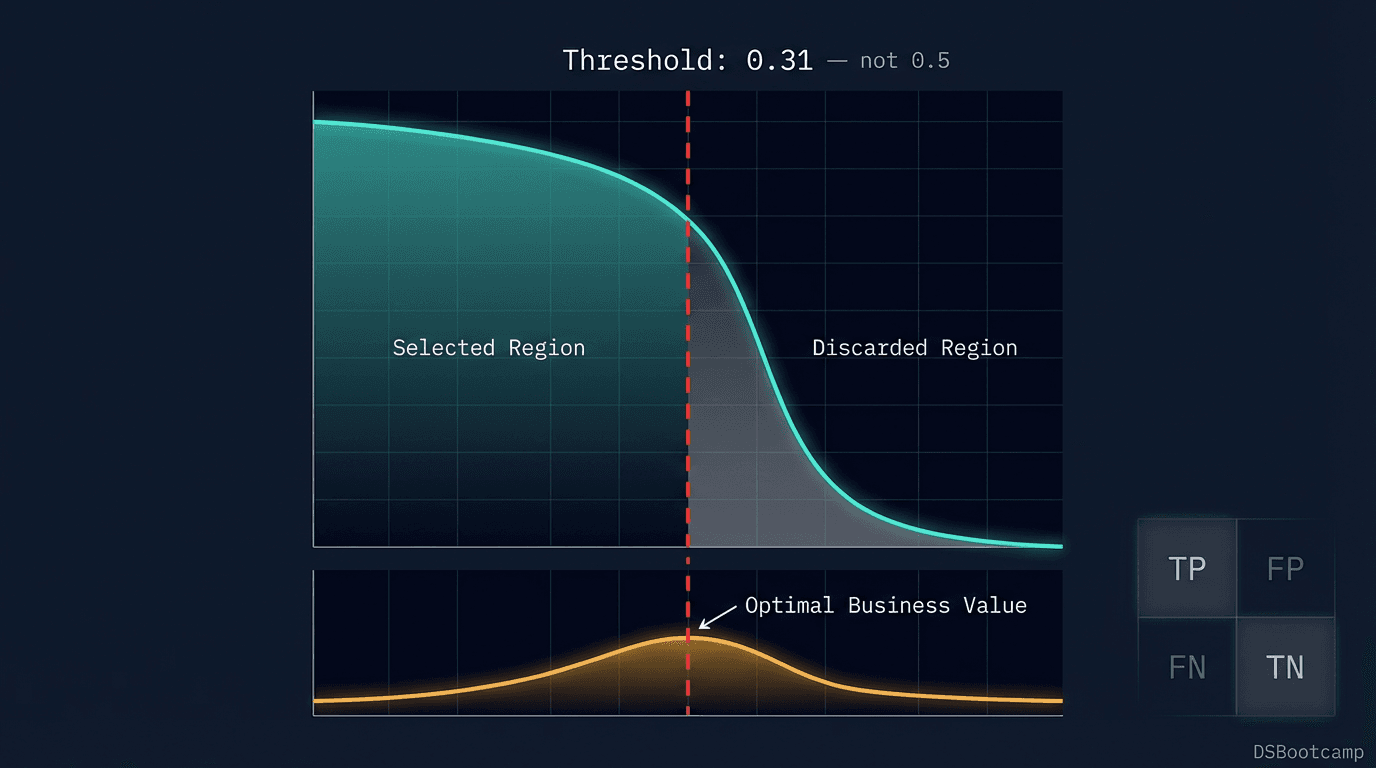
How to Choose the Right Classification Threshold — Not Just 0.5
Why 0.5 is almost never right, how to use precision-recall curves, how to frame the cost matrix, and the step-by-step process to set a business-justifie...
DSBootcamp Team
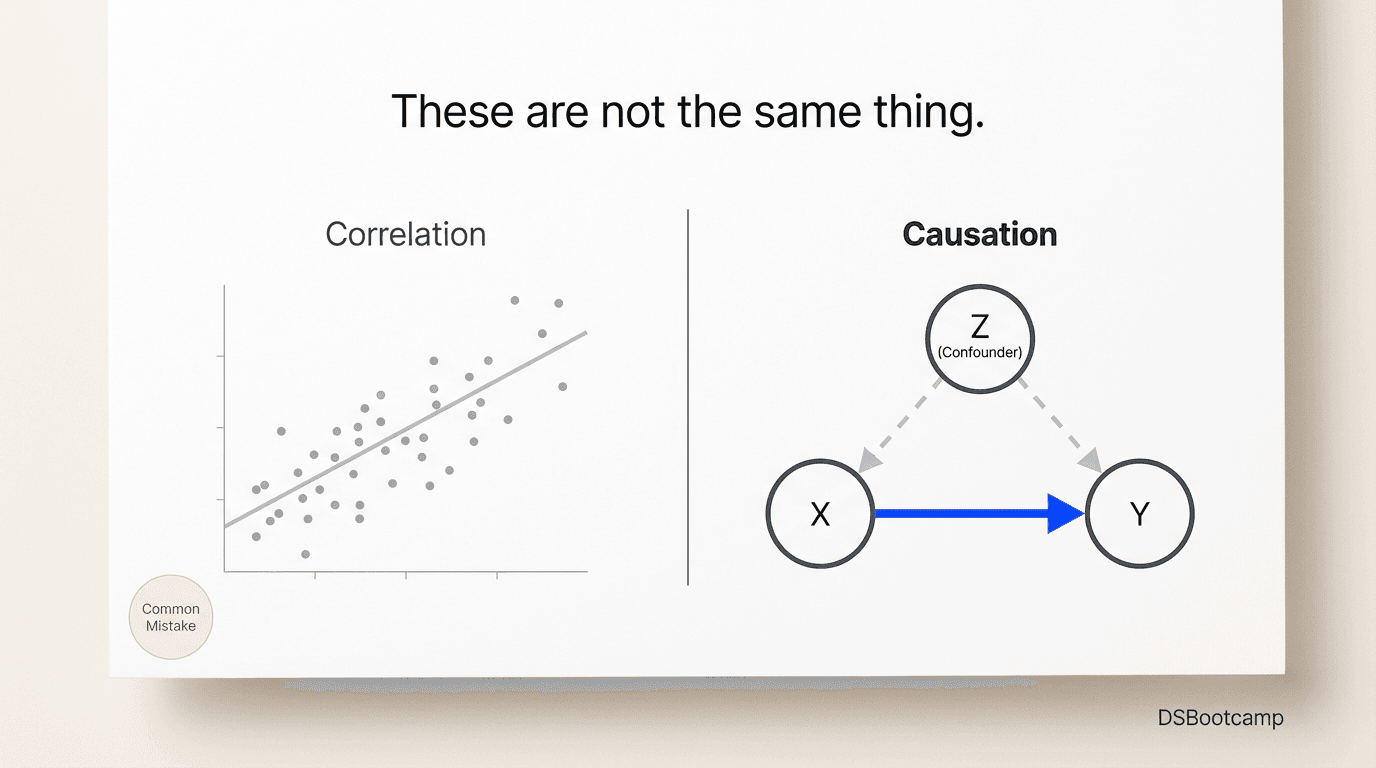
Why Correlation Will Get You Fired and Causation Will Get You Promoted
The business cost of confusing the two — and the minimum causal toolkit every applied data scientist needs before touching observational data. Here is a...
DSBootcamp Team
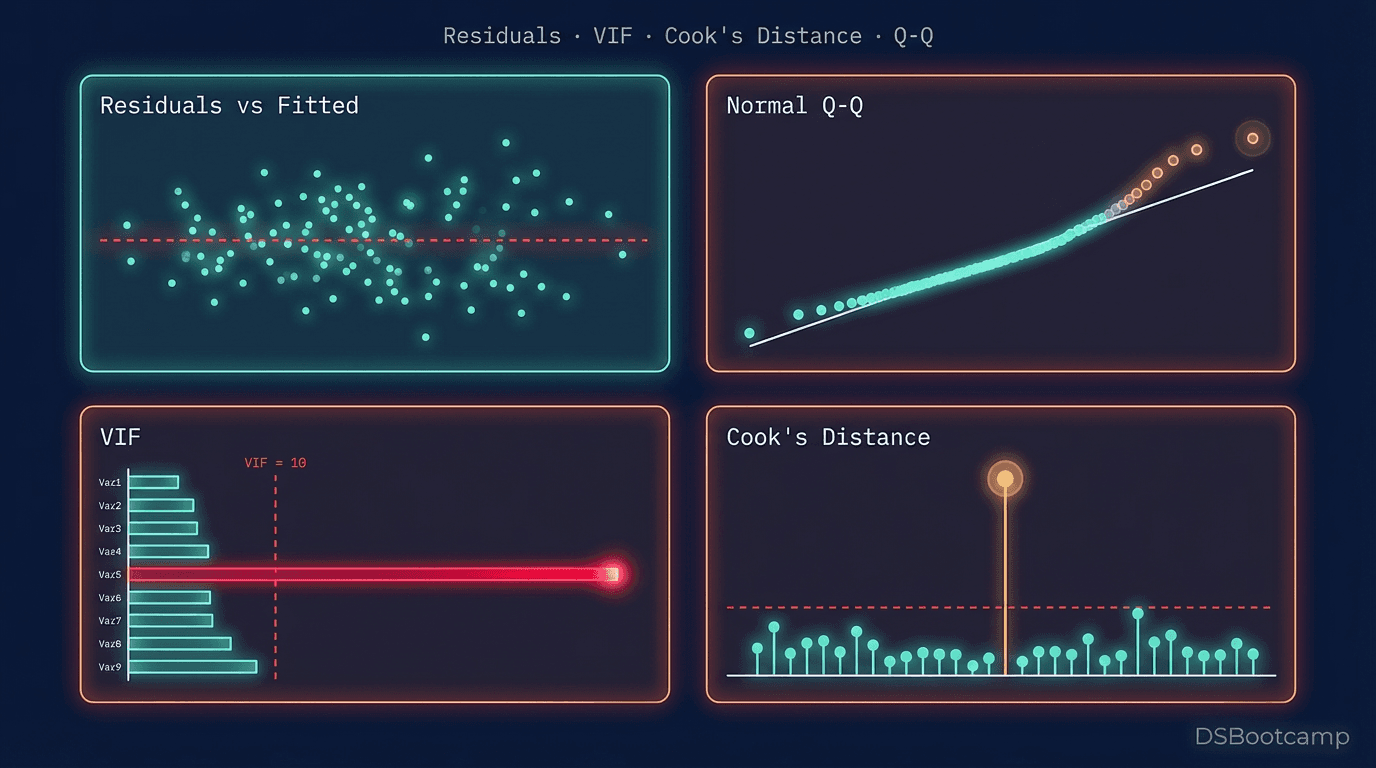
How to Make Sure Your Regression Model Is Actually Trustworthy
Residual plots, heteroscedasticity checks, multicollinearity via VIF, influential point detection, and what to do when assumptions break. A regression m...
DSBootcamp Team

The Retail Data Ecosystem: What Data Actually Exists in a Retail Company
If you want to do meaningful retail analytics, you first need to understand what you're working with. Here's the map most aspiring analysts never get. W...
DSBootcamp Team
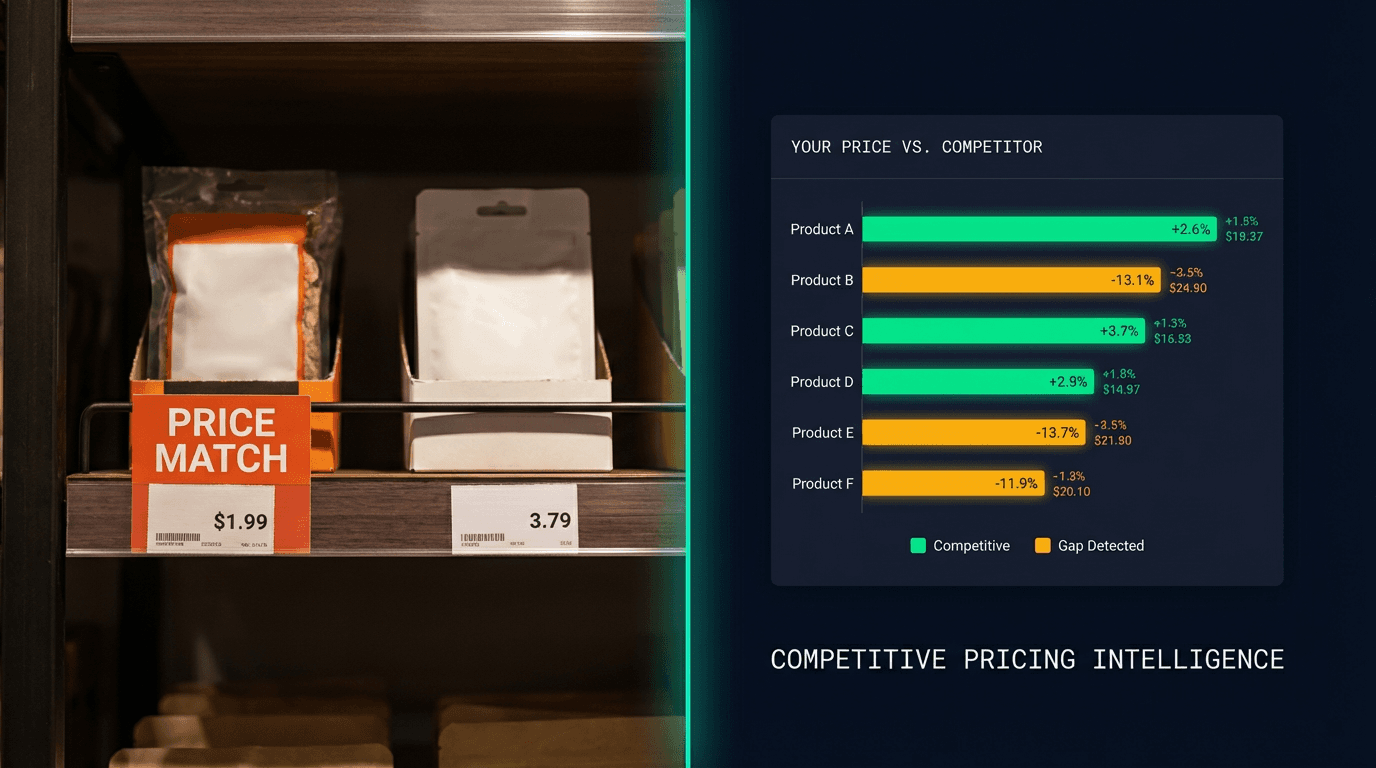
How Competitor Pricing Strategy Actually Works in Retail
Price matching, dynamic repricing, and competitive intelligence pipelines — the systematic approach large retailers use to win on price without destroyi...
DSBootcamp Team

How Demand Forecasting Works at a Fortune 500 Retailer
From statistical baselines to ML overrides — how large retail teams combine human judgment and algorithmic forecasting to decide how much of every SKU t...
DSBootcamp Team
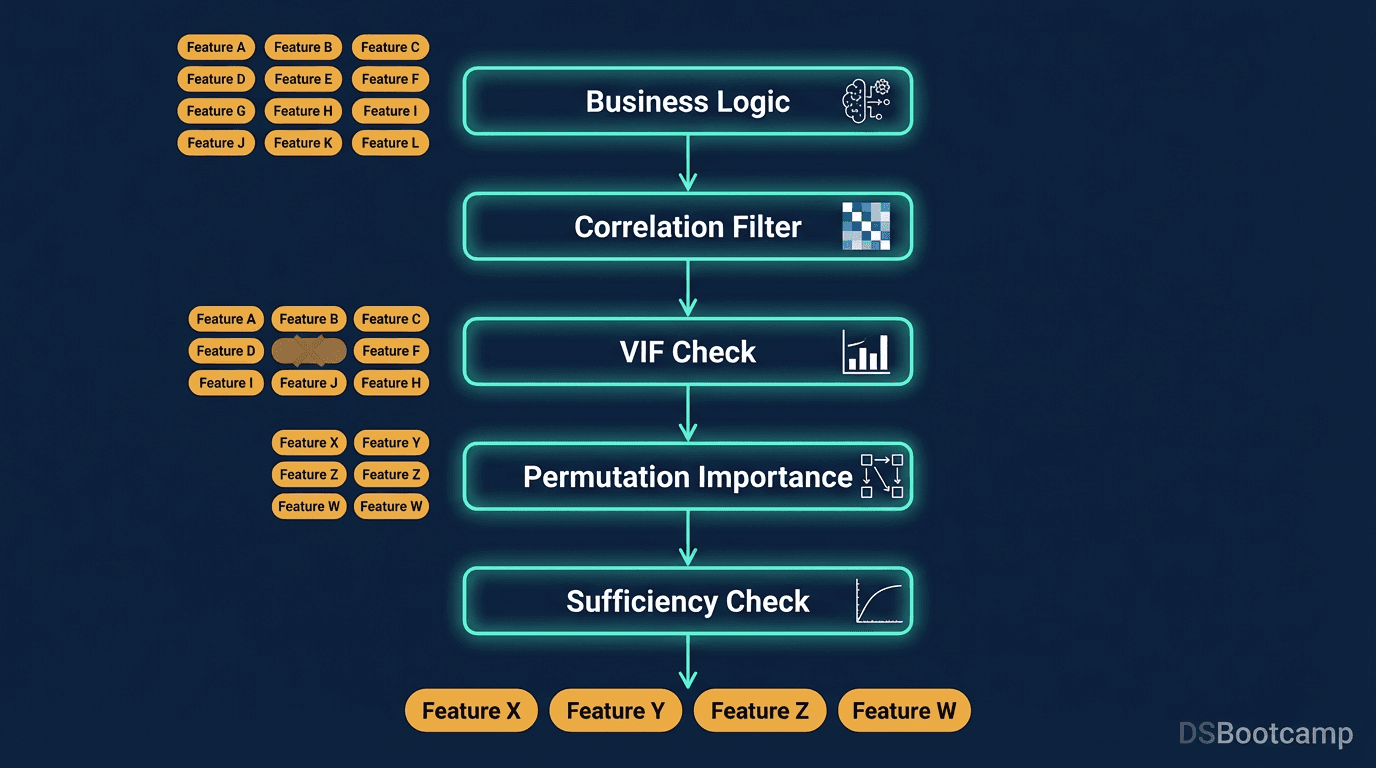
How to Do Feature Selection Properly — The Full Process from Logic to Code
Start with business logic, filter by correlation, check VIF, run permutation importance, and know when enough features is enough. Feature selection is w...
DSBootcamp Team
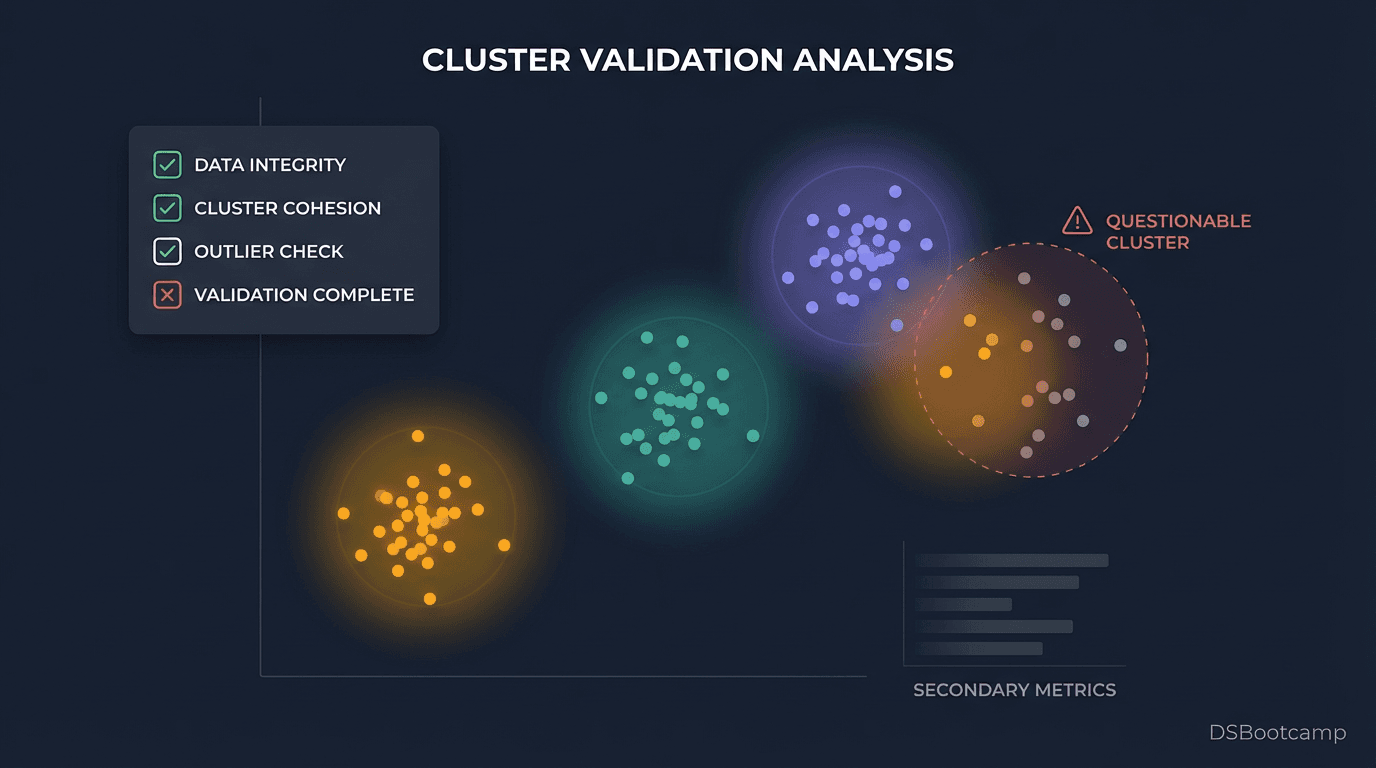
How to Know If Your Clusters Actually Mean Anything — A Validation Checklist
Step-by-step: choosing k, silhouette scoring, profiling each cluster, stress-testing stability, and the business sense check before you present. Cluster...
DSBootcamp Team
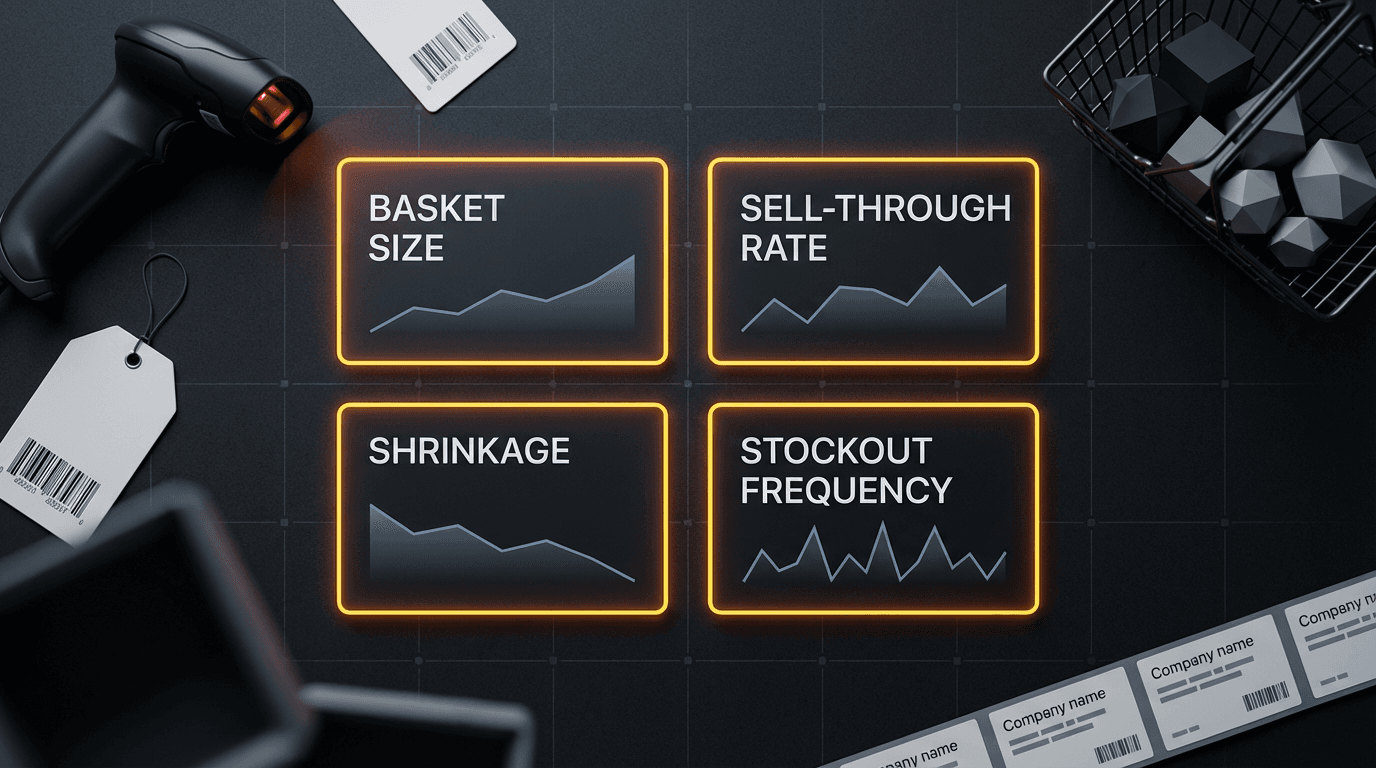
The KPIs That Actually Run a Retail Business
Revenue is a vanity metric. The numbers that matter in retail are basket size, sell-through rate, shrinkage, and stockout frequency. Here's what each on...
DSBootcamp Team

Why Retailers Know What You'll Buy Before You Do
Price elasticity models, markdown timing, and inventory aging signals — the hidden analytics stack behind every promotional decision on the shelf. You w...
DSBootcamp Author