
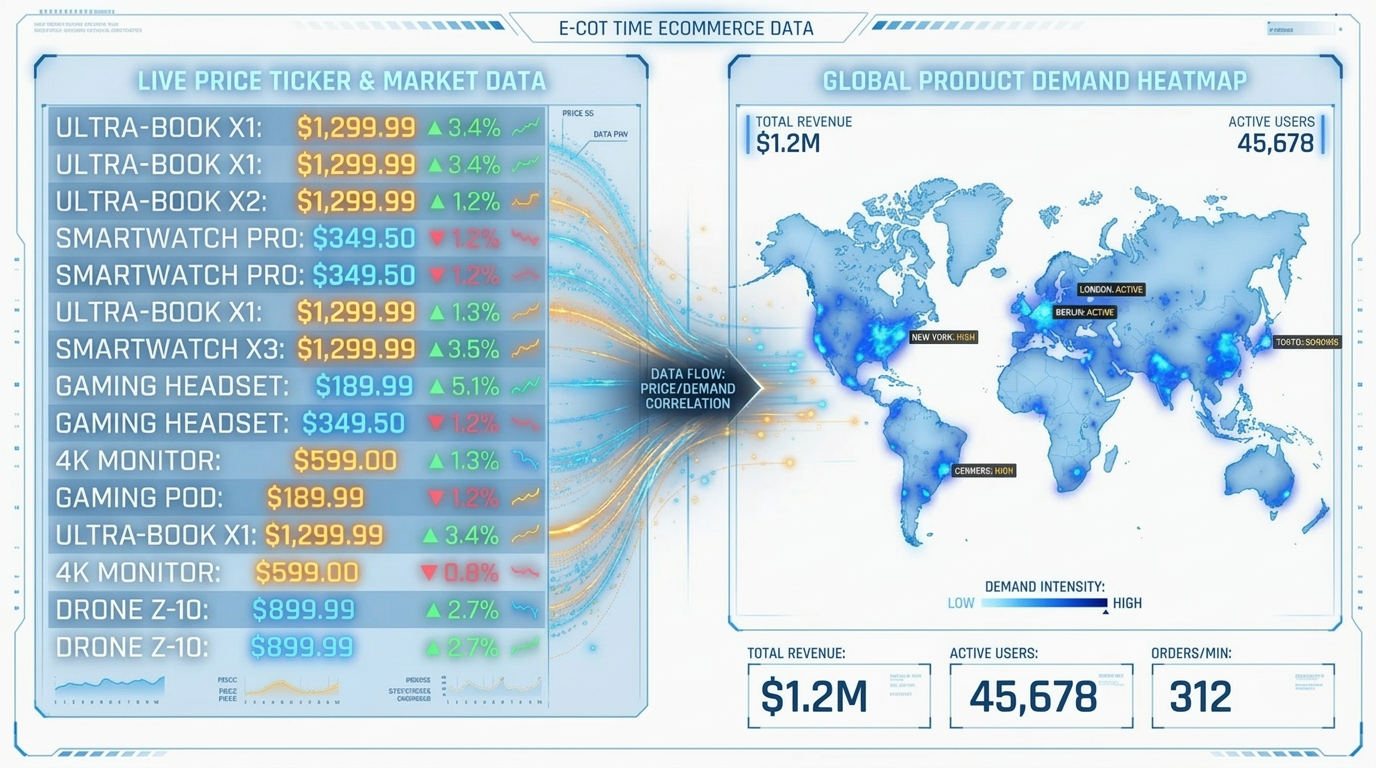
You've probably noticed it. You add something to your cart, step away for an hour, come back — and the price has changed. Maybe by a dollar. Maybe by twenty. You're not imagining it. The marketplace you're shopping on probably updated that price hundreds of times while you were gone.
This isn't a glitch. It's a system that's been meticulously engineered. And once you understand how it works, you'll never look at an "Add to Cart" button the same way again.
Dynamic pricing isn't new — airlines have been doing it since the 1980s. But what's changed in the last decade is the scale and speed at which it now operates. A major e-commerce platform doesn't reprice products daily or even hourly. It reprices them continuously, using algorithms that process millions of data points before serving you the number you see on that product page. What looks like a simple price tag is actually the output of a real-time decision engine.
Here's how that engine works.
The Basics: Why Prices Move at All
Static pricing made sense when commerce happened on shelves. A store manager walked the floor, checked what was selling, and marked things up or down a few times a year.
Online marketplaces operate in an entirely different reality. They're open 24/7. They're competing against dozens of other platforms simultaneously. They carry millions of SKUs. And every one of those products is sitting at the intersection of supply, demand, competition, and margin — all of which shift constantly.
Dynamic pricing is the answer to that complexity. Instead of setting a price and hoping for the best, a marketplace uses algorithms to continuously find the right price — the one that maximizes revenue without losing the sale.
The goal isn't always the highest price possible. It's the optimal price. Sometimes that means pricing aggressively low to win the sale and build loyalty. Sometimes it means holding firm at a higher margin when demand justifies it. The algorithm is always solving for a balance — and it's doing it faster and more accurately than any human pricing team ever could.
The Four Signals Driving Every Price Change
1. Competitor Price Tracking
The first thing a dynamic pricing engine watches is what everyone else is charging.
Specialized bots crawl competitor sites — sometimes every few minutes — scraping prices across thousands of identical or near-identical products. The system then knows, in near real time, whether your marketplace is priced above, below, or at parity with Amazon, Walmart, Target, or whoever else is selling the same item.
The strategy here isn't always to undercut. Some platforms are built on trust and speed, not cheapness. A marketplace with a strong brand can afford to be 5–10% more expensive on a commodity item because customers trust their delivery times, return policies, or product authenticity. But the data still has to be there. You can't make a smart pricing decision without knowing where you stand.
What makes this tricky is that competitor scraping is an arms race. Large retailers know they're being scraped, and some actively mess with the data — displaying one price to bots and another to real users, or rotating prices rapidly to confuse competitive intelligence systems. Sophisticated pricing teams account for this by cross-referencing multiple data sources and using human spot-checks to validate the automated data.
2. Demand Signals
This is where things get interesting — and a little personal.
Demand signals are behavioral data points the platform collects from its own users. Not aggregate statistics from the outside world, but real actions real people are taking on the platform right now. Think:
- Search volume for a product over the last 24 hours — is interest spiking or cooling?
- Add-to-cart rates — how many people are putting this in their basket vs. actually buying? A high add-to-cart but low purchase rate can signal the price is sitting just slightly too high.
- Page views and dwell time — is traffic to this product page spiking suddenly, possibly from a viral post or a press mention?
- Wishlist additions — people flagging it for later, signaling intent without urgency
- Return rate patterns — a higher-than-average return rate can indicate the product isn't living up to its price point, which the system might address by nudging the price down
- Abandoned cart recovery data — how price-sensitive are the people who almost bought but didn't?
When demand spikes — say, a product goes viral on social media, or a holiday is two weeks out — the algorithm reads the signal and adjusts the price upward. More people want it; the platform captures that added willingness to pay. When demand cools, prices often soften to re-stimulate conversion.
This is pure supply-and-demand economics playing out in milliseconds. The difference from a traditional market is that the feedback loop is nearly instantaneous, and the system is responding to hundreds of signals at once, not just one.
3. Inventory Levels
Inventory is the pressure valve of the system. When stock is high, there's less urgency to extract maximum margin. The goal shifts toward moving units — so prices may drift lower to accelerate sales velocity and avoid the carrying costs that come with sitting inventory. A warehouse isn't free. Every day a product sits unsold is a cost the business is absorbing.
When stock is running thin, the calculus flips. Scarcity justifies a higher price — and signals stronger demand, which is itself a reason to charge more. And if a product is about to go out of stock entirely, some systems will actually increase the price in the final hours to squeeze the last bit of revenue from a dwindling supply.
This dynamic is especially visible in categories like electronics, seasonal apparel, and limited-run products. A jacket that starts the season at $89 might climb to $120 by late October if stock is nearly gone and demand is still strong. Come January, unsold inventory drives the price back down aggressively.
This is also why you'll sometimes notice a price spike right after a product sells out and then restocks at a new (higher) baseline. The restock signal tells the system: this product has proven demand. Reset the floor accordingly.
4. Time and Contextual Factors
Beyond the core data, dynamic pricing engines also factor in variables that have nothing to do with the product itself:
- Day of week and time of day — conversion rates differ significantly on weekday mornings vs. Saturday evenings. Platforms learn when their customers are most price-sensitive vs. most ready to buy, and they price accordingly.
- Seasonal patterns — historical data about when specific categories peak allows the algorithm to pre-position prices ahead of surges rather than just reacting to them.
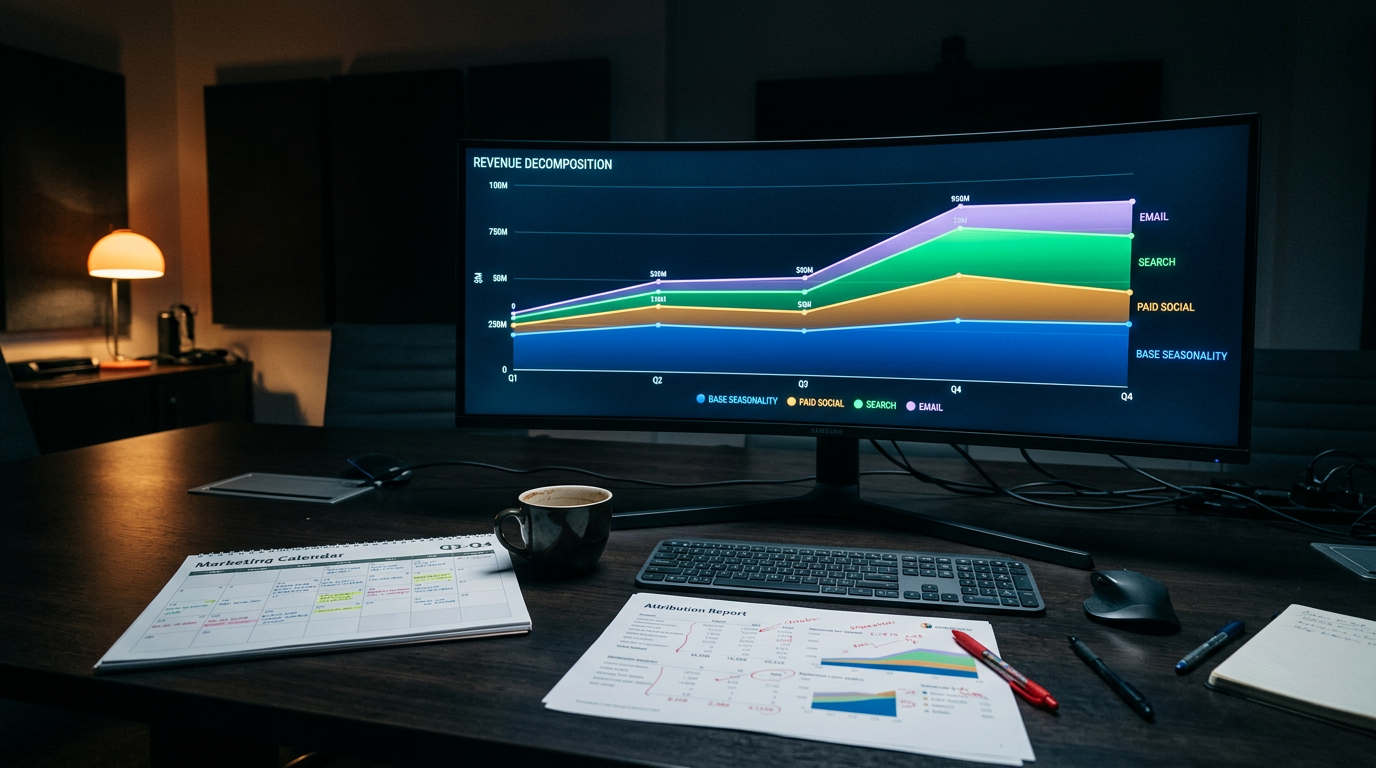
- Promotional calendars — Black Friday, Prime Day, back-to-school, and other major retail events require careful pre-planning. Platforms often suppress prices in the lead-up to these events to avoid cannibalizing the promotion, then strategically manage them during the event window.
- Weather, for relevant categories — umbrellas, space heaters, fans, sunscreen — these categories see price adjustments tied to weather forecast data in markets where that data is integrated into the system.
- Geographic signals — some platforms price differently by region based on local competitor presence, cost-of-living indices, or fulfillment costs. A product might be $5 more expensive in a remote zip code simply because shipping there costs more.
The One Thing the Algorithm Never Crosses: The Margin Floor
Here's the detail that most people outside the industry don't realize: every dynamic pricing system has a hard floor. No matter what the algorithm recommends — no matter how fierce the competitor pressure, no matter how slow the demand — there is a minimum price below which the system will not go.
This is the margin floor, and it's calculated based on:
- Cost of goods (what the marketplace paid the supplier, or what the seller paid to source it)
- Fulfillment and logistics costs (pick, pack, ship, last-mile delivery)
- Platform fees and payment processing (which can add up to 10–15% on some marketplaces)
- A minimum acceptable profit margin, set by business leadership based on category strategy
The margin floor is a business rule that lives outside the algorithm. It's set by humans and protected by the system. It's the line between smart discounting and selling at a loss. When a competitor drops their price below your floor, the system doesn't follow them off the cliff. Instead, it flags the situation for a human buyer or category manager to review.
That review might conclude the floor needs to be reconsidered — maybe the supplier contract can be renegotiated, or maybe that SKU is worth running at a loss for strategic reasons (to win a customer, to anchor a category, to deny a competitor a win). But that decision is made deliberately, by a person, not automatically by an algorithm chasing a price match.
This is also why you'll sometimes see a marketplace simply go out of stock on a product rather than match a competitor's lower price. It's not a failure — it's the floor holding firm. The platform would rather not sell the item at all than sell it at a margin it can't sustain.
The Human Element Still Matters
It's tempting to think of dynamic pricing as a fully automated black box that runs without supervision. The reality is more nuanced — and more interesting.
Category managers set the floors and override the algorithm for strategic products. A loss leader that drives category traffic, a hero product where brand perception matters more than short-term margin, a new SKU where the goal is market penetration rather than profit — all of these require human judgment that the algorithm isn't equipped to provide on its own.
Merchandising teams coordinate pricing with marketing campaigns so a product isn't algorithmically marked up the same week you're running paid ads promoting it. Customer service teams flag when price changes cause visible confusion or backlash — a product that jumps 40% in 24 hours might be technically optimal for margin but commercially damaging if it erodes customer trust.
There's also the ethical dimension. Algorithms that reprice too aggressively during emergencies — think hand sanitizer during a pandemic or generators after a hurricane — can trigger regulatory scrutiny and public backlash. The best platforms have guardrails for exactly this kind of scenario, not just because it's the right thing to do, but because the reputational cost of being perceived as price-gouging far outweighs any short-term revenue gain.
The algorithm is powerful. It processes more data, faster, than any human team ever could. But it works in service of a strategy, a brand, and a set of values. And all of those are still human responsibilities.
A Data Practitioner's Quick-Reference Takeaways
1. It's multi-objective, not single-metric. You're not just maximizing revenue. Production systems balance margin, conversion rate, inventory velocity, and LTV at the same time. Know which objective function is actually being optimized before you touch the model.
2. Behavioral signals beat transactional ones. High view-to-cart, low cart-to-purchase is a quiet signal that the price ceiling has been hit. If your feature set only has historical sales and competitor price, you're leaving elasticity signal on the table.
3. Competitor price data is dirty by design. Retailers intentionally poison scraper feeds. Any external price pipeline needs anomaly detection and cross-source validation baked in. Treating scraped data as ground truth is an expensive habit.
4. The margin floor is a hard constraint, not a regularization term. It doesn't belong in your loss function — it belongs as a post-model guardrail. Gradient descent will occasionally violate soft penalties. A margin floor can't be occasionally violated.
5. Inventory creates non-stationarity your model probably isn't handling. Scarcity shifts the demand-price elasticity curve. A model trained on stable inventory periods will misbehave at the tails. Either make inventory an explicit feature with full range coverage, or build a separate adjustment layer on top.
6. Elasticity isn't static — re-estimate it continuously. A coefficient estimated once on historical data is already stale. Category-level elasticity shifts with macro conditions, competitor moves, and product lifecycle. Rolling re-estimation with causal controls is table stakes for a serious pricing system.
7. Your demand features have a feedback loop problem. If today's demand signals were shaped by yesterday's price decision, you have training data bias. Counterfactual evaluation and careful feature timelines aren't optional in pricing — they're how you avoid a model that's quietly wrong in a hard-to-detect direction.
8. Human overrides are signal, not noise. Every time a category manager ignores the model's recommendation, that decision contains domain knowledge the model doesn't have. Log the overrides. Log the outcomes. That dataset will improve calibration faster than most feature engineering work will.

.png)
.png)